photo Image277_1x1_zps92a4c832.gif photo Image277_1x2_zps82501ae2.gif photo Image277_1x3_zpse2f7619b.gif photo Image277_1x4_zpsbfd3d820.gif photo Image277_1x5_zps55244bd5.gif photo Image277_1x6_zpsa94012cf.gif

Friday, July 17, 2015

Daily 5 Foundation Lessons- Chapter 6 Book Study

When friends have asked me about the differences between the first Daily 5 book and the second edition of Daily 5, one of the big ones for me is the detail to the foundation lessons and the lesson plans of the first few days. I feel like this edition is much easier to implement!

Chapter 6 was all about the foundation lessons you teach to prepare your students for each Daily 5 task. By teaching these foundation lessons, you set your students up to be independent and successful… because it’s all about setting the expectations for your kids.

When I read them this time, it hit me.

These aren’t just foundations for Daily 5!
These are foundations for a productive, independent classroom.

Think about it- choosing a “successful spot” or choosing a good working partner lessons are really perfect for any time of day. I always try to empower my students with the responsibility of choosing a good spot when they come to sit at the carpet, or choose a partner in groups- because it asks my students to know themselves as learners and be aware of what works for them.

This is important to me because we are NOT all the same. My mom is a get-it-done-early, sit-at-a-desk, focus-on-one-thing type person. When I work, I prefer to be on the couch with a favorite show (currently Gilmore Girls) on in the background, and usually, I’ve procrastinated- but then I keep tweaking it until it’s perfect! It’s just a different style.

Some of my kids prefer to sit at a desk, where they can have their book on one side of the desk, their notebook on the other, and an easy surface on which to write.

Other kids want to be curled up on a beanbag in the weirdest positions, with a book in the air and their fingers tapping and toes wiggling the whole time.

library1

(This was a picture of my not-quite-finished library at my old school- plenty of different areas for kids, with a few rugs and other areas around the room!)

In any case- it’s important for our kids to figure out what works for them so they can be independent readers and learners even when an adult is not telling them what to do. It also builds a culture of responsibility for our choices.

I always talk with the kids about my own friends. I have some friends I just love, but I know I could not sit next to during an important staff meeting- because we’d be distracted, talking and giggling to each other the whole time. They seem a little shocked that I might ever “misbehave”- but I want them to understand that we are ALL human, and we ALL have to make choices that help us be successful.

Ultimately, these foundation lessons are teaching our students decision-making strategies. I’ve always looked for ways to do this (one of my very first blog posts was about teaching students to use Rock, Paper, Scissors in the classroom!)- but Daily 5 does it in such a structured way.

The foundation lessons also support my very first science lesson of the year- all about our brain, and how we should constantly be working to make our brain stronger.

Teaching our students about growing in stamina and about how to work with a partner are so powerful because they give ownership over students’ own learning. I think my favorite is the “Coaching or Time?” lesson for Read to Someone. In it, students learn that they should give someone a few seconds to try a word before chiming in (or, as I tell them, “give your partner a chance to make their brain stronger”) and then offering two kinds of help. The student can choose if they would like coaching or more time to help them decode the word.

These foundation lessons support my class through every subject, but they’re also vital to making sure my students are independently focused during Daily 5 so that I don’t have to stop my small group and individual instruction!

These foundation lessons are especially important for Listen to Reading and Word Work because of the materials. The materials for Listen to Reading may be tricky to navigate at first- but teaching students how to use them but also how to get them out and put them away is huge.

computers1

(Our Listen to Reading station!)

And in Word Work? These were what my students considered to be “fun” materials- so it was especially important to teach the expectations and practice them repeatedly.

Of course, the specific, reading-based lessons are important… but my big takeaway from this chapter was just how much Daily 5 contributes to student success all day. If you want details on the foundation lessons taught, I’d definitely suggest getting the Daily 5 book!

You can also read more from my friends in the book study, starting with our host from Sarah’s First Grade Snippets! She has a great primer on all of the Daily 5 foundation lessons : )

Sarah's First Grade Snippets!

[Note: This post contains affiliate links.]

Friday, July 10, 2015

Daily 5- Launching Read to Self

Starting the Daily 5 sounds a little daunting at first, but the second edition of the book really breaks it down even better than the first!

I’ve really been enjoying our Daily 5 book study with Primary Inspired, and today I’m hosting Chapter 5- Launching Read to Self!

launching daily 5

Read to Self is probably my favorite part of Daily 5… and I was surprised to find that it was a favorite of most of my students, too. Teaching our kids to be independent readers is hard but powerful!

A big key is to start small.

In my head, I thought about how we teach any other part of reading. We don’t expect a kid to go from the ABC’s to knowing sounds to knowing decoding and being able to read- we take them through one step at a time. The same goes for building stamina.

If you start small and build in increments, your kids will grow and get there. You just need to give it repetition and guided release.

Over time, your kids will build stamina. (Here’s my stamina graph from my first class of Daily 5 kids! They LOVED to see if they could get it higher!)

IMG_7951

One way the second edition of Daily 5 was better than the first was the emphasis on foundation lessons. These 3 are really the building block lessons to set your students up for success in Read to Self- but remember,t he mini-lessons should only take 7-10 minutes!

  • 3 Ways to Read A Book
    As a fourth grade teacher, my Upper Grade Skeptic light went off on this one- but the Sisters want us to remember that not every kid is necessarily reading on grade level, and yes- even those older kids need this!
  • I PICK
    If your students don’t know how to choose appropriate books (and continue to receive guidance through the year if they struggle), they’re not going to sit somewhere and read independently! This lesson is so important to turning them from “survival” readers to lifelong readers!
  • Choose a Successful Spot
    Can I just say an “Amen” to this wording? We need to be teaching our students in EVERY part of the day to make choices that allow them and their classmates to be successful- and asking them to take this on and then analyze whether it worked or not is so powerful. How many times a day do your kids have those decisions made for them?

Ultimately, these and other foundation lessons are going to give your students the tools they need to do Read to Self and the other Daily 5 choices- because you’re not just expecting them to know what to do, but you are explicitly teaching, modeling, and allowing practice.

And for me, I’m already thinking about how I can apply these ideas beyond the Daily 5 time.

This summer, your goal as a teacher needs to be to think through your procedures first. Consider what you want to see- and where you think the pitfalls may be. Look at your schedule to see if you can plan in any regular brain breaks. (I highly recommend GoNoodle- it’s free!) Finally, keep your expectations low at the beginning, and plan for days and days of practice sessions. Don’t worry- they WILL get there, and once they’re ready, you won’t need to waste time correcting misbehavior as often.

Take time now to make up time later!

Finally, when you feel frustrated because it feels like your kids will NEVER get to 20 minutes of stamina, remember why it’s worth it. I loved the Sisters’ takeway from Gambrell’s work, saying that giving our students choice leads to ownership, and that leads to motivation, learning, and responsibility.

As hard as it is to give up that control and to let our students be responsible for their own choices, it’s really, truly the best thing we can do to make them problem solvers. After all, we don’t want them to turn out like this:

Thanks for reading my thoughts on chapter 5!

Be sure to read the Chapter 5 takeaways from the blogs below, too:

Sunday, July 5, 2015

Shark Week Blog Hop

All teachers know that kids learn more when they’re excited and engaged. Today Matt from Digital: Divide & Conquer and I are hosting a team of bloggers to help your students take a BITE out of learning with a theme your students are sure to love!

Slide6

 My Shark Week freebie is a few shark-themed passages for about grades 3-5. Together, the three passages guide students in analyzing genre, while still including some general annotations and reading comprehension, too! After reading the three passages, students complete a short written response that forces them to compare and contrast the passages.


I am REALLY excited to try this out with my class- and I can't wait to hear what you think!

fintastic freebie

Click on the photo below for Colorful Close Reads: Shark Attack! Genre Study.


Be sure to go for a swim and visit Hilary at Rockin' Teacher Materials for the next free resource!

http://rockinteachermaterials.blogspot.com/2015/07/shark-week-blog-hop.html

Every blog in the Shark Week Blog Hop features a jawesome freebie for you and your students- but hurry! Shark Week only lasts until Sunday, July 12  : )


Wednesday, July 1, 2015

10 Steps to Teaching and Learning Independence- Daily 5 Book Study

When I first heard about the Daily 5, I have to admit I scoffed a little. Oh? Your kids just read for 20 minutes? Yeah, okay, but I know I’d have kids who wouldn’t be able to do that.

Then I kept hearing the word stamina. Over and over again.

And I realized, when I read the book, that the Sisters don’t expect kids to just be able to do it automatically. Instead, they teach it- just like we teach other skills and procedures- and then help the kids gradually build their stamina, from a couple of minutes up to many.

They describe a Daily 5 time in the classroom in this way:
”Reading is so important, they can’t and won’t let anything get in the way.”

And this is how I feel about that:

To get there, the Sisters line up 10 steps, which I tried to break down a little. (I highly encourage you to get the book and read about them in detail!)

1. Identify what is to be taught.
We do I Can statements in my school for this same reason.

2. Set a purpose and create a sense of urgency.
If kids don’t see the point, they won’t be invested… just like us.

3. Record desired behaviors on an I-chart.
We’ve all made charts with our kids, but the I-chart is especially powerful because kids see what the teacher will be doing, too.

4. Model most-desirable behaviors.
When the kids go from listening and looking at a chart to actually seeing them, and actually doing them, is powerful.

5. Model least-desirable behaviors, then most-desirable behaviors again.
Let your class clown be a class clown, and make the others laugh- and then praise them for doing such a wonderful job of doing it right. It’s also a great way to avoid the “But I didn’t know I wasn’t allowed to ___…”

6. Place students around the room.
”Is this a place where I and others can be successful?” is something that is so helpful not just in Daily 5, but all day. We have to teach our students to take responsibility for their choices and reflect on them.

7. Practice and build stamina.
How do you get better at anything? You practice. And you give it time.

8. Stay out of the way.
This is so hard. The hardest part of the Daily 5, I think. You have to let the kids practice without stepping in. You can’t circulate, you can’t give reminders, because you’re letting them learn to depend on you. Instead, we have to teach them to reflect and self-manage. And isn’t that what we all want?

9. Use a quiet signal to bring students back to the gathering place.
Give them the chance to get up, move, and stretch a little- but don’t jar them out of their reading worlds. I secretly love seeing a kid trying to finish that one sentence or that one page before putting away their book box- because it’s a sign that they are into their book. Quietly, gently transitioning keeps the mood just right for focusing on a mini-lesson!

10. Conduct a group check-in.
Again, we can’t always be the one telling the students whether they did well or poorly. We have to teach them to make that call for themselves and internalize their own power.

That’s really what these steps to independence are- they’re training kids to believe their own power, and to build a growth mindset.

Kids can grow in any way they want if they believe it and work for it- and the Daily 5 helps them see that opportunity for growth in themselves.

I wrote in our chapter two post about how the steps to independence really made a difference for one of my impulsive, unusually active students.

In chapter 3, they gave us a word for those kids- “barometer kids”- the ones who run out of stamina first and give you an idea of when the rest of the class will struggle.

I am a firm believer that these steps to independence will make the difference for your kids- especially your barometer kids- for any behavior you want to teach.

They really are the reason the Daily 5 works:

“[In] the Daily 5, we let the students who are present in front of us guide our teaching, based on their experience, stamina, needs, and behaviors.”

Amen, Sisters. Amen.

This chapter’s book study is being hosted by my good friend Whitney at The CraZy Schoolteacher- pop on over to see others’ takeaways!

Thanks for reading! I am LOVING this book study with Primary Inspired!

Friday, June 26, 2015

Daily 5 Book Study- Chapter 2

Today I’m catching up with Primary Inspired and the rest of our book study to read Chapter 2, which is all about the foundations of the Daily 5, and I have to say- in my classroom, THIS is what made it work!

daily 5 chapter 2

So many of the foundations we built in Daily 5 didn’t just hold for Daily 5. They became the basic foundations of our interactions throughout the day- and I think that’s why it was so powerful.

Here are the basic foundations:

  • Trust and Respect
  • Community
  • Choice
  • Accountability
  • Brain Research
  • Transitions as Brain and Body Breaks
  • 10 Steps to Independence

I mean, look at those. I want my classroom to be based on these things- not just in reading, but in everything!

Since I’m no longer a traditional reading teacher, I’ll talk a little about how this looked in my 3rd grade classroom a few years ago, but also how I’m looking at incorporating these foundations into my science/ social studies classroom this year.

Trust/ Respect/ 10 Steps to Independence

Imagine a school building where you feel your principal doesn’t trust you, or doesn’t respect you… or where you’re told vaguely what to do, but expected to go from zero to sixty immediately without any support. (Yes, I’ve been to those PD meetings too!)

I know I cringe at the thought- and yet, sometimes this is the kind of environment teachers put their students in.

Probably the biggest one I was guilty of? Not trusting my students to be independent.

It wasn’t that I didn’t think my kids would try- but I didn’t think they were capable of it. And honestly, before I taught them the expectations, modeled them, practiced them, and took the time to build up stamina… they probably weren’t capable of independence.

I loved this quote:

“If children came to our class needing to be taught to become better readers, we had such respect for them; of course we would teach them the skills and strategies to achieve that goal. However, it students came to our class without the stamina or engagement skills needed to sustain reading and writing, we didn’t realize we should teach them these things just as we taught reading skills and strategies to them.” (Emphasis mine.)

Um, DUH. We teach so many procedures at the beginning of the year- so why had I never thought to spend time on this?

The first day I taught Read to Self to my third graders, I told them the goal was 3 minutes- but secretly, I thought sure they’d be able to get to 5. Especially given our school population (a lot of professors’ and engineers’ kids in a pretty well off area), I thought we’d hit 5 minutes.

Yep, didn’t even make it to three minutes that first day.

The little one who was the first to “break” from his concentration was a kid who probably had ADHD, but his family didn’t even want to consider a diagnosis. I didn’t blame them for not wanting to go the medicine route, but to not see if there was anything that could help him broke my heart- because he was one of those students who desperately wanted to make his teachers happy. He came in every day with a smile on his face, but with such an impulsivity that being “good” was so, so difficult. He had come into my classroom that fall with a warning from his second grade teacher, but that first day of Read to Self, I saw the biggest thing holding him back.

He could sit still and focus for a little over 2 minutes. That was it.

Over the next few weeks, we built up our stamina. This sweet little boy tried so hard- and we made it to 25 minutes of reading, including him.

I was so, so proud of him- and more importantly, he was proud of himself, and he was slowly learning to be more in control. It didn’t mean he never talked out, or that he was never impulsive, but he had so many less behavior problems- and I think it was absolutely because training to sit still and focus on learning in Daily 5 carried over to the other times in the classroom that he needed to sit still and focus on learning.

Now that I teach science and my students switch classes, I need to think about how I can trust them to be independent. I’m already thinking about some of my routines (stations, labs, coming into the room, moving to the carpet, getting supplies, notebooking, etc.) and how I can directly teach what it looks like to be successful, and scaffold until they build stamina at it.

I think anchor charts, modeling, and practicing will probably take up a few days- but I think it’ll be worth it!

Community

Building community in the classroom is so important. It’s what makes students feel safe and comfortable trying, even at the potential expense of failure, because they trust their teacher and classmates to respect them.

I found this easiest when I taught youngest kids. Around third grade is when, developmentally, our kids start to move from caring mostly about themselves to worrying about what others think. This year, when I taught 5 classes of 4th graders, I found the community-building piece even harder.

Is there really anything more important, though?

We usually don’t switch classes in the typical sense until the third day of school, so I’m digging into what books I want to read (like Exclamation Mark) and what activities I want to do to really build a rapport with my homeroom. (See my exclamation mark below?)

For my other science classes, I plan on starting the year again with learning about neurons and synapses. It sounds too hard for them, but it’s a great lesson for my students to think about how we learn. (I plan on posting about it later this summer!) I want to add a few activities that dig into our own strengths and weaknesses, too- the more we realize that everyone has strengths and everyone has struggles, the less ashamed of our struggles we will be!

I loved this quote about building community so much that I tweaked it into a poster for my classroom. Feel free to click on it to download a copy!

Daily 5 Quote Freebie- Luckeyfrog Learning

Choice/ Accountability

One of the hardest parts about letting go of all the “stuff” in the literacy block is the panic of:

“How will I know if my kids are actually doing the work?
And how do I grade it?”

They’re understandable questions. When my kids did literacy centers, I’d come home on Friday with a stack of center work to sort and grade, and while it was a lot of work, I had some proof that they were or weren’t getting their work done… and it was easy to put something in the gradebook.

What I should’ve been asking myself, though- did their grade really reflect their achievement in reading, or just their ability to complete work independently?

I really struggled with this because I didn’t start the Daily 5 with my school- I started it alone, and I was afraid that the parents or principal would balk at the lack of evidence, or the amount of student choice. The big key for me was making sure that my students had accountability- and it came in the form of individual conferences and their reading notebook. (Read more about our easy reading notebooks here.)

reading log

We were required to keep our 90 minute reading block as just reading, so Work on Writing was really Writing about Reading in my room. We used simple reading notebooks (read more here) and checking their reading log and reading their entries were great for assessing my students’ reading. My students always knew what they had to complete because of our Weekly Must Do’s board.

weekly must dos 2

As for choice, it was a little scary to give them freedom to choose- but I found that if I gave them guidance about how to make good choices (not just fun ones), they were actually suprisingly responsible- even without me recording their choices. You can read more about Daily 5 choice and accountability in my room here:

daily 5 choice

Brain Research/ Transitions as Brain and Body Breaks

If I were to go back to school for my doctorate, my research would probably have to do with the brain and learning. It fascinates me- always has! It’s part of why I started out studying biology, and why I read books like The Woman Who Changed Her Brain in my free time. (Very interesting, by the way!)

Seeing the brain research behind Daily 5- especially this nugget of research from Ken Wesson- really made me think:

The average number of years our children are in age parallels the average number of minutes they can maintain attention during direct instruction- whole group, small group, or one-on-one, as measured by PET scans.

What? That means my ten year old students should not be expected to attend longer than ten minutes to one single task.

The good news is that John Medina’s research says after ten minutes, the brain can refocus with a slight shift. I’m already thinking about how I can switch locations, input, etc. to shift slightly. Whole Brain Teaching, technology, GoNoodle… so many ideas!

I definitely think the transitions were a huge part of making Daily 5 successful in my room! I was initially worried about the transitions taking too much time, but they were helpful for letting my kids get the wiggles out- and they helped my kids focus during the mini-lessons and Daily 5 rounds.

Whew!

See how much thinking I got out of one chapter of this book? The Daily 5 book really makes you examine what’s important in your classroom. You can read what the other bloggers in our book study thought by heading over to Ciera’s blog, Adventures in Room 129.

daily 5 book study logo

*Note: Links to books are affiliate links.

Saturday, June 20, 2015

Daily 5 Book Study- Chapter 1

My first year in my own classroom, I spent so much time looking for free center activities and then printing, laminating, and cutting.

In the first chapter of the Daily 5 book, the “two sisters” talk about all the “things” done during literacy time. They say,

“We had spent the majority of our time preparing for
and reviewing the children’s busywork.”

And, um… guilty.

When I read the Daily 5 book for the first time, I remember feeling a little underwhelmed because it was all so simple. It’s just a framework- a way to set up your literacy block- and it involves so many less reading “things,” and so much more actual READING.

(Did I also mention that this means you don’t have to spend every waking moment cutting out laminated centers?)

daily 5 book study logo

I picked up a copy of the 2nd edition of Daily 5 to join in a book study with Brenda from Primary Inspired and some of my friends. We’d love to have you join us, even if you’ve read the first edition of the book!

The second edition of the book goes into so much more detail about each individual lesson you teach to set up your students for success, and it talks about how to do a similar framework in math. The back of the book has about 30 pages of helpful templates and lesson plans, too!

Compared to the first edition, this one gives you a little less of the “why,”
and a little more of the “how.”

The first chapter does delve into background of the Daily 5, though… and I love the way the authors, Gail Boushey and Joan Moser, use research to justify so much of what they do!

Probably my favorite thing about Daily 5 and the two sisters is that it is FLEXIBLE. I’ve never been one to read someone else’s theory and copy it exactly in my classroom- because every class is different, and every teacher is different… and because these two authors are actual teachers, they get that.

“The Daily 5 is not a prescriptive program to be followed blindly, the same way each day, month, and year. Instead, we as educators need to respond and react to the diverse needs of our own students.”

Wait—is that ACTUAL RESPECT FOR EDUCATORS AS PROFESSIONALS? Is that TRUSTING us to make decisions that benefit our kids? Awwww yeah!

As I read the Daily 5 this time, I’m sort of looking at it through a different lens. I’m not a self-contained teacher anymore, and I primarily teach science now.

We do teach a reading RTI block, though! This year, my group was around 20-25 students, so I’m hoping that next year I can use an adaptation of Daily 5 to give my kids a lot of reading time and small group instruction… so this whole flexible, go-with-your-kids’-needs philosophy is perfect!

If you’ve never used the Daily 5 framework before, it’s made up of two main parts:

  • Mini-Lessons
    • less than 10 minutes (based on brain research)
    • based on strategies from CAFÉ (the 2 Sisters’ companion book)
  • “Rounds”
    • teacher meets with small groups or confers with individuals
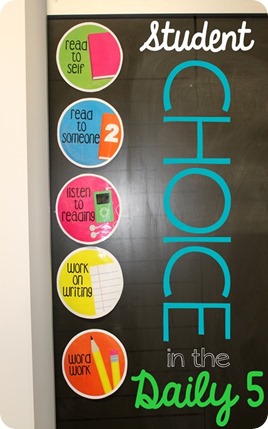
    • students choose between five options:
      • Read to Self
      • Read to Someone
      • Listen to Reading
      • Word Work
      • Work on Writing

In my classroom, it worked so well- because my kids were engaged in real, meaningful reading tasks… and probably most importantly, they were systematically taught how to do these tasks independently.

And because they were independently engaged in activities they chose, my kids didn’t interrupt my reading groups or conferences.

The first time my principal observed during Daily 5, she was blown away. She said she kept trying to find kids off-task… and couldn’t.

That’s the power in the Daily 5. It’s huge. And best of all, it’s flexible to you, your students, and the things your admins require of you (usually!).

We are so excited to read this book together and share our thoughts! If you’d like to get a copy of the book, you can get one here.  {affiliate link}

We would love to hear your comments and questions along the way! You can also go to Primary Inspired to read more about chapter one from the other teachers in the book study.

daily 5 chapter 1

Do you use the Daily 5 in your classroom? If you do, what do YOU love about it?  :  )

Sunday, June 14, 2015

10 Ways Teachers Can Foster a Love of Learning

My summers as a kid included Library Day.
It was usually Wednesday. We’d go to the library, I’d proudly take my Summer Reading Program log to the counter, and then I’d pick out a stack of new books. I usually had to stop when I couldn’t carry the stack anymore.
I love reading. Always have. But my brothers, who were raised in the same household as me- with the same parenting, same read-alouds, same library trips- didn’t get that same love… so it’s not JUST home that matters! It takes teachers, too.
Over at Adventures in Literacy Land today, I talked about one of the ways I was unintentionally killing my students’ love of reading. Here, I want to share about some of the things I do in the classroom to build a love of reading in my students.
foster a love of reading
  • Read great books aloud.
    Pick a really wonderful book that your kids will love, and don’t be afraid to leave out the “lesson” once in awhile. The lesson can just be that reading is fun. (This year, I read aloud Holes by Louis Sachar. They’d beg me to read more! Helloooo, isn’t that what we want?)
  • Build a big, diverse, and growing classroom library.Your kids should always be able to find something they love to read that they can read. That means you need variety in a lot of ways- and your library can never be “done” because you should always be looking to add books for your current students. Plus, adding new books through the year brings excitement! Remember, too, that it’s not just traditional books that “count”- and letting kids check out books for home can be a powerful way to encourage more reading.
  • Create some buzz about books. Talk up good books. Read just the first chapter as a teaser. Find book trailers online. Browse through the month’s Scholastic Book Order and make suggestions. I have a stack of books at home and a long list on Goodreads of books I want to read next- and we want our students thinking ahead, too!
  • Let them see you as a reader.Tell them about the current book you’re reading, or how you stayed up late last night to finish. Let them see you reading the book for a few minutes. Be as excited about new books as they are. Tell them about your moments as a reader- when you choose books, when you’ve abandoned a book, when a book was hard, the books you loved, and the books you hated. Some teachers even create a display in their room to show what the teacher is reading, which I love!
  • Start reading routines.One time in my classroom, it started storming. We had a wall of windows, and we could see the trees swaying, the rain pounding, and the lightning flashing. A few of my 2nd graders were clearly a little scared, so I told them how much I LOVE storms- especially reading to the sound of rain. (I really do!) We decided to stop our lesson, turn down the lights, and curl up with good books (me included). From then on, whenever the rain started to pour, my kids would ask if we could pause our lesson to read… and one of my students’ moms told me her kid started to do it at home, too!
  • Get kids hooked on a series or author.
    We read aloud The Boxcar Children, and the librarian had a hard time keeping the mysteries in stock. We read aloud The BFG, and my kids would almost fight over who got the next Roald Dahl book. Sometimes, reading teachers need to give kids a taste to get them hooked! (Try not to feel too much like a drug dealer, although books are not a bad addiction to have.)
  • Build a reading community.I’m just starting Reading in the Wild, but she’s already made this point for me. Lifelong readers suggest books to their friends, go to book clubs, lend books to family, share what they’re reading on Instagram, join Goodreads, etc. I try to give my kids occasional time specifically for sharing what they’re reading with others. Setting up a way for kids to suggest books to each other is great, too!
  • Make reading comfortable.
    Set up an environment that is physically comfortable. Some kids will stretch out on the floor, others will curl up on a rug, and a few just like to sit at their desks. As well as being physically comfortable, kids need to be used to the routine of just reading, and they need to feel comfortable choosing and reading whatever they want without judgment from their classmates. One year, the boys in my class got really into Rainbow Magic Fairies books… yes, really!
  • Let kids choose books… but get to know their interests and needs so you can help!Sometimes, kids need to read books at their instructional level… but most of the time, getting them to love reading is more important. If I walked into a library and someone picked books for me, they’d probably never even make it out of the bag. As teachers, we can help guide students in the direction of books that fit their interests and their instructional needs, which is really important to them being successful!
  • Give them chances to be successful.Nobody likes to feel like they’re bad at something. When I worked with intervention kids last year, some of them had felt “bad at reading” for years- so when I started giving them specific goals and feedback, helping them track their progress through recordings and fluency graphs, and even giving them chances to “teach” other students or read to younger kids, their confidence grew so much. Make sure every kid gets to feel like they’re good and growing.
If kids love to read, they will read more. If they read more, they’ll get better at reading.
Helping kids to learn to love reading needs to be a HUGE part of our literacy time. Our kids need strategic instruction, too, but if we leave out the passion, our kids won’t be as strong at reading and will only read in school… probably for the rest of their lives.

What are some ways you build a love of reading in your classroom?

Tuesday, June 9, 2015

Currently… loving summer!

I just have to thank you for the love on my last couple of posts. I’m going to step off the soapbox for now and share a little more lighthearted look at the last few days!

I spent a lot of hours (over 25 for sure) from Monday- Thursday working on my classroom. I worked on organizing my classroom library (again)… and spent a lot of time going through the supplies left in my closets when I moved in last year. Sooo good to do a little purging and get it all packed up!

image

A lot of hours at work for the first week of my “summer off,” though!

Definitely shared a lot with #teachersummerwork  : ) Thanks to those of you who have joined me! (Not sure what I’m talking about? Read more here!)

Now that I’m done in my classroom for a bit, I’m linking up with Farley to share…

currently june

{listening} – Yep, I love Netflix. Suggestions for my next show are very welcome : )

{loving} – My husband works 2nd shift, so we don’t usually get a lot of time together during the week. My dog is also loving a little extra time with her people!

{thinking} – I need to set some goals or I won’t get everything done! The To Do list is so, so long… including lots for my class, even more for home, and some TpT projects, like a few updates to Text Detectives, finishing Text Detectives Jr., and creating a new product series!

Hint, hint…

Slide2

{wanting} – There’s a teeny chance we could be moving and I hate not knowing for sure! Fingers crossed that I know soon!

{needing} – To get healthier again! I’m back to tracking what I eat- just makes me more aware- by using MyFitnessPal, and I use my FitBit to track my daily steps.

In full honesty, I should mention that today I ate Graeter’s ice cream… and the kids’ families gave me about $30 more in gift cards there.  So… ice cream is gonna happen. But I’m going to try for balance!


I’m so excited to blog more this summer! I’ve missed writing about teaching and connecting with other teachers. Thanks for reading along and commenting!

Tuesday, June 2, 2015

My Summer Off

When people hear I’m a teacher, I don’t often feel a lot of respect. Yesterday, I wrote about how I believe teachers deserve respect for their intelligence as well as their hearts.

Today, I want to talk about another one of my pet peeves:


I’m not gonna lie. I’m very excited to be on summer break.

For me, summer break means actually getting to see my husband every day. (He works second shift.) That’s similar to a lot of teachers- summer break means more family time.

Summer also means a chance to relax. During the school year, despite what the contract says, I work long hours and often bring work home. (Yes, I realize some teachers don’t do this- but many, many teachers do.) By the summer, I am exhausted physically, mentally, and emotionally-and I need time to refresh.

Now, please don’t get me wrong. We are far from the only job where people feel stressed and could use a break- and I’m not about to tell you that we work harder than any other profession out there, because I know there are plenty of other hardworking people out there- but that doesn’t diminish what we do.

Summers “off” are a luxury, and I get that. But every job has its perks and its drawbacks, and teachers do work hard.

We earn this perk, and others- but they come with the drawbacks of the job. Among them:
  • Low pay relative to our education level
  • Requirement to stay current with little to no compensation for classes, advanced degrees, training, and other professional development
  • A lack of respect as professionals
  • Very little flexibility in our time off
  • The need to write sub plans when we are sick or need to be gone
  • Not being able to always leave work at work, and rarely being able to finish everything that needs to be done within contract hours
  • The emotional strain of worrying about students & not always being able to help
  • The need to follow the ever-changing whims of our politicians (or sneak around them to do what is actually best for our students)
In recent years, a lack of job stability, an increase in workload due to widespread budget cuts, a loss of autonomy and trust in our professional knowledge, the pressure and stress of significant change due to new standards and tests, and the risk of losing pay over statistically unreliable test scores have become prevalent concerns, too.

We chose this job despite the drawbacks. And non-teachers did not choose this job despite its perks. If you are jealous of a summer off… are they worth those drawbacks to you?

And summers off? Here are just a few of the things I do for my job during my summer “break” (and I know I’m not the only one):
  • Continuing professional development
    In order to renew my license, this is necessary. Every great once in awhile, I’m able to get a grant or a reimbursement from my district… but this year alone I’ve already spent over $500 to attend professional development this spring and summer, and I’m spending at least 5 days at PD this summer along with reading a couple of professional books. (One is not required by my district, but it was given to us and recommended.)
  • Organizing and prepping my classroom
    My school year started with one paid day before students arrived- and half of it was spent in meetings. For me, a teacher new to the classroom, that meant less than 4 hours to move my teaching supplies in, unpack them, organize them, and get them ready to use with students- not to mention putting even basic décor up in the classroom to make a welcoming environment. Yeeeah- I spent DAYS there before school started. I just didn’t get paid for it. Even now that I’m not a newbie, I have to pack up my classroom at the end of the year and unpack it in the fall- plus organize anything that my ten-year-olds didn’t keep in perfect shape all year. (Hint: That’s a lot of things.)
  • Organizing and prepping the curriculum
    Getting a room ready isn’t enough. Once students arrive, I need to dive right in to building a classroom community and teaching procedures. Most schools also have an open house or back-to-school night just before or just after the beginning of the year, and it’s good to have information to give parents about the course and what you’re doing. Of course, to even be able to do that, you must spend significant time planning out your year by looking at the standards, studying the provided resources, and finding resources to supplement them if they’re not perfect (which, let’s face it, they never are). Even if you’ve taught it before, there are always things to tweak and improve… and of course, every few years, something changes that you need to relearn.
  • Buying classroom supplies
    I have been so lucky to work in districts where basic supplies are provided. I know teachers who get one box of copy paper for the year, and when it’s gone, they have to provide their own. (It doesn’t go as far as you think.) Even with the basics provided, I have bought thousands of dollars in books, science supplies, organizational bins, and so much more for my room. I spend part of my summer in dollar stores, Target’s Dollar Spot, and every single store that sells school supplies trying to find the best deals on the things my students will use. And sometimes, going back again because there’s a limit per transaction.
  • Meeting with other teachersI’ll be going to a couple of unofficial, unmandated, unpaid meetings with my team- because we know that being on the same page is important enough to meet outside of paid time. We’ll be helping make fair class groupings for next year (which benefits the kids and teachers) as well as planning our discipline, homework, etc. so we are ready to share with parents that first week.
All of these are things I do on my own time, and in many cases with my own money- because I have to in order to do my job well.

Please know- I'm not complaining about the amount of work. I chose this profession.

I continue to choose this profession, year after year, because I love it and I think it's worthwhile.

All that I want is for the general public to know two things…

I don’t get paid for the summer “off.”
Even though my paychecks continue, I am only paid for the 185 days of the school year as per my contract (exact number varies slightly per school).

I DO work over the summer.It’s just on my own schedule, and typically unpaid (or I pay for it myself). Many teachers also work another job during the summer to make ends meet.

As teachers, I think it’s important for us to get the word out about what we do during the summer. With so much negative media about teachers, I’d love to drum up some buzz on social media straight from the horse's mouth that shows we ARE hard-working professionals.

This summer, when you go in to school, read a professional book, go to PD, shop for your classroom, or anything else work-related on your “summer off,” please post on Instagram, Twitter, or Facebook with the hashtag #teachersummerwork.


Help us get the word out about how much we really do. It’s not that you can’t also post about when you cherish moments with your kids or when you kick back on the beach and enjoy a cool beverage (like many other professionals do on the vacation time they’ve earned)- but if even it’s just YOUR Facebook friends that see the work you’re doing, you may help to change the public perception of “lazy” teachers who get their summer 100% “off.”

Let's show them how hard we work for the kids, even when we're on summer "break."

Are you in?

post signature

Monday, June 1, 2015

Teaching Is NOT a "Cute" Profession

This weekend I met someone new, who asked about my job. When I said elementary teacher, her response?

“Awww.”

Don’t get me wrong, there are ‘cute’ aspects of my job. Kids say funny things. Kids can be adorable. I get to read cute books and make cute things occasionally.

But that response drives me CRAZY.

Teaching, as a profession, is seen as a nice job. You must be a kind, caring person with a good heart. And I absolutely agree with that.

What most people don’t seem to realize is that it’s also an extremely difficult job.

I’m a manager of 29 very different personalities- except I don’t get to ‘hire’ the best qualified for the job, and I can’t fire them if they’re not doing it.

I’m a diagnostician, constantly digging deeper into assessments and observations to determine exactly why a student doesn’t understand, and then determining an appropriate treatment plan, like a doctor treating a disease.

I work with concepts that seem very simple decades after one has learned them, but are actually very difficult at first. I explain them in a way that makes sense and allows all other learning to build upon it. What is easy to do is not always easy to teach. I can’t tell you the number of people I’ve met with advanced college degrees who know their field well, but can’t explain the simplest concepts in a way others will understand- and I do it daily.

We take on so many roles in the course of our day- and while caring for the kids and showing them love is a vital part of the job, we need much more than a sweet heart to do this job.

We need intelligence and creativity. We need education and training. We need passion and perseverance. And when we do our jobs well, we have the power to change our students' lives very directly- teachers are the biggest determinant of student success.

A recent study showed that an excellent kindergarten teacher's students in a single class will go on to earn approximately $320,000 more than their counterparts in other classes.

And the world still thinks we’re babysitters.

For one- even babysitting would not be easy. Entertaining 20-30 small children for any length of time is no small feat. (For many adults, even entertaining 2-3 is tough!)

And for another- we’re not just expected to occupy their time. We don’t just color or fingerpaint. Naptime is nearly completely gone from the elementary world. Movies are usually a very rare thing- because we are actually there to make sure they learn something. A lot of things, actually.

The very foundations of most things you do on a daily basis.

So, when you think of teachers… please don’t awww.

This isn’t a “cute” job. It isn’t a “nice” job. It absolutely, positively isn’t an “easy” job.

I am smart.
I am well educated.
I am a professional.
I work my tail off.
And I love teaching, but I deserve to not just be appreciated for the heart it takes, but also respected for the brain it takes.

And so do all teachers.


---

I believe, as teachers, we need to make the world more aware of the WORK we do. Not to be lauded with accomplishments, but to gain respect as professionals. Read my next post and join me in correcting one of the misconceptions that annoys me most!  : )


post signature