photo Image277_1x1_zps92a4c832.gif photo Image277_1x2_zps82501ae2.gif photo Image277_1x3_zpse2f7619b.gif photo Image277_1x4_zpsbfd3d820.gif photo Image277_1x5_zps55244bd5.gif photo Image277_1x6_zpsa94012cf.gif
Showing posts with label reading notebooks. Show all posts

Monday, July 20, 2015

Daily 5- When to Launch The Next Task (Chapter 7 Book Study)

Welcome back to our Daily 5 book study!

In case you’re new to the Daily 5, there are 5 main tasks that students perform during the Daily 5 “rounds”:

  • Read to Self
  • Read to Someone
  • Listen to Reading
  • Word Work
  • Work on Writing

A big piece of the Daily 5 is to introduce the system slowly, and it starts with introducing Read to Self. After that, though, teachers need to know when to launch the next task, and that’s what chapter 7 is all about!

daily 5 chapter 7

The biggest question to ask: How do you know when they’re ready? The Sisters say, again:

IMG_6928

One year, you may move on to the 2nd Daily 5 task in 3 or 4 days. With another class, it might be two weeks. What matters is not the specific timeline, but that you treat this like any other skillset to be learned.

“Every class is different.”

When YOUR class can demonstrate independence and stamina, they’re ready to move on- but the Sisters suggest different limits for different groups of kids.

daily 5 chapter 7

When I taught with the Daily 5, I waited to move on until my 3rd graders had about 15 minutes of stamina- but we continued to practice it until our graph reached 20 minutes. (We just alternated practicing Read to Self and Read to Someone.) Now, though, the Sisters suggest moving on to Work on Writing next.

(Yes, if you read the first edition, this is a change!)

Basically, they say that writing is too important to wait any longer- and it’s also something that most students should have a little stamina in. 

This summer I’ve been sharing some of my notes on Instagram, and people seem to like them… so I thought I’d share my notes from this section of the chapter:

IMG_6930

Just like with Read to Self, we instill a sense of urgency and purpose in our students by telling them that Work on Writing is “the best way to become a better writer.”

Keep in mind, though, that Work on Writing is not replacing your writer’s workshop time!

In my classroom, I wanted my 3rd graders to be responding to text, so we switched “Work on Writing” to “Writing About Reading.” I had to add in a few extra foundation lessons and modeled journal entries to teach my students what this looked like- but then I gave them pretty free reign to write about their thinking as they read, because I didn’t want them to be worried about a formula. (You can read more about our reading notebooks here.)
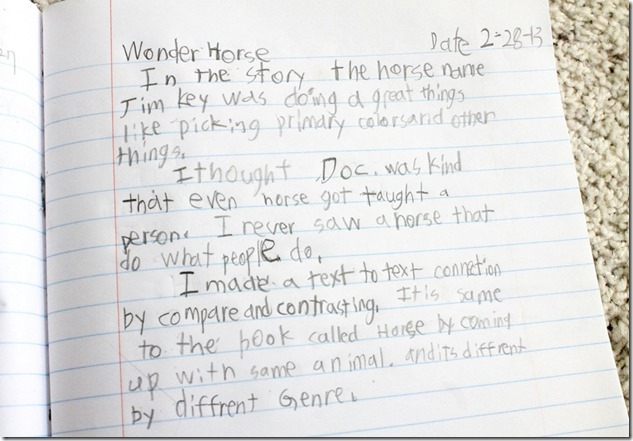
notebook 1

For those students who weren’t ready yet, I conferred, led small groups, or wrote responses back in their notebook to help guide them in the right direction. It just meant they needed more teaching- not that they couldn’t handle it!

This chapter walks you through the 10 Steps to Independence for this specific task, including giving your students choice. Yes, it’s hard to give up choice- but it’s important. Why? Here’s another excerpt from my notes:

IMG_6933

Once you start letting students choose which task they do, you need to give them a little accountability. The Sisters use check-ins for this. And while I can see the benefit of keeping an eye on where your kids are spending their time… I felt like I could usually keep an eye on this by watching my kids’ reading notebooks and glancing around the room. While they use check-ins to make sure an even number of kids go to Read to Someone, or to dismiss in smaller groups, I focused more on teaching my kids strategies for problem solving in those inevitable situations.

I do like the idea of having students set a goal and a strategy they will use to reach their goal- something about voicing a goal helps you make it there!- but taking even a couple of minutes out of each round seemed too much. With older kids, I think setting the goal could be done at the beginning of the week in their notebooks.

As the rest of this chapter focuses on launching the other tasks, the foundation lessons focus on identifying potential pitfalls and setting the expectations before you even get started. Here’s another glimpse at my notes…

IMG_6934

If you feel like the Daily 5 takes too much time to get going, keep in mind that you are teaching each one of these things now, so that you won’t have to stop learning much later. I did have occasional times where we reviewed expectations, but it was so much less than in previous years- because we did it right the first time. This is really a case where slow and steady wins the race (and makes the teacher less crazy later!)

And please- if the idea of giving your kids choice is terrifying, read this post from a couple of years ago…  it can work with accountability- and work SO well!

daily 5 choice

I have so enjoyed revisiting the Daily 5 during this book study. I hope you are loving it as much as I am! You can see everyone linked up to this chapter at our host - Mrs. Price’s Kindergators- or check out the linky below!

Friday, October 18, 2013

The Perfect Book to Teach Asking Questions!

Okay, I have a new favorite reading lesson-- my asking questions lesson!

Teaching Students to Ask Questions Before, During, and After Reading with This Is Not My Hat

When I got a chance to work with Scholastic last spring, they gave us a bag of swag that any teacher would love, and it included the book This Is Not My Hat by Jon Klassen, which is perfect for teaching a reading lesson about asking questions! (I’ve linked it to Amazon here, but I also highly recommend finding it through Scholastic Reading Club :)

image

On my CRAFT board, we list "Ask questions before, during, and after reading" as a reading comprehension skill (although some of my kids think it belongs under Response to Text, so we concluded that it could go as either!). This is a really important skill for some of my struggling readers, because some of them never question what they read. They are just reading to get it over with! (oops- took this picture before we added it!)

IMG_0428

  • Asking questions before reading gives them a purpose for reading and gets them engaged. When they are looking for the answer, students read more intently.
  • Asking questions during reading makes sure they are thinking about what they read.
  • Asking questions after reading causes them to be reflective about the author's choices and sometimes helps them draw a personal opinion about the text.
  • Asking questions is a great place to start students’ thinking while reading!

I love teaching questioning towards the beginning of the year, because this is a gateway skill to deeper comprehension. Asking questions about the text isn't too hard to do (especially with a well-chosen text!), so it helps to build the habit of thinking as they read. It's also a great way to get students started in their reading response journals because it's a pretty clear-cut type of response that most of my students feel confident trying.

image

I used this book with my 2nd grade group and all the way up to my 5th grade group. It's great for teaching this skill because the title and cover instantly intrigue them. Kids wonder, "Whose hat is it?" and "Why is a fish wearing a hat?" I tell them we are going to look for the answers to our questions as we read, and we start the read-aloud.

As we read, I stop every few pages and ask the students to whisper to their partner something they are wondering about the story. Then, I choose a few students to tell their questions out loud. (I get 100% participation this way, and more confident kids who are willing to share!)

We keep track of our questions on a chart like this- both adding new questions, and putting check marks next to our questions that get answered. (My markers are dying—ugh!)

Asking Questions anchor chart from Luckeyfrog's Lilypad

Of course, the chart I made for my partner turned out even better. (Isn't that always how it works?) She actually laminated it so she can use it again sometime (which is such a great idea, especially for us as reading specialists who might teach a version of this lesson to each grade level!).

Asking Questions anchor chart from Luckeyfrog's Lilypad

This book also makes a great review for "the three ways to read a book," or using the pictures as readers to help us understand. (Actually, you could use this book to teach that lesson, too, but I just used it as a review.) The book is being told from the little fish's point of view, and so the text only tells us so much. If students don't read the pictures, they won't know the entire plot- and they won't enjoy the book nearly as much!

(Here, the text tells us that little fish doesn't think the crab will tell anyone where he went... but the illustration tells us that the crab does tell!) The younger kids, especially, love "catching" the discrepancies between the text and the pictures.

This Is Not My Hat preview, art (C) Jon Klassen

At the end of the book, the text stops and we just see illustrations. Some kids are always shocked by this! And, immediately, they all have opinions about what happened to the little fish. Some think he was eaten, some think he just gave the hat back, and some think he ran away. The ending of the book is left open and never actually tells us what happens, and so my students are always left with questions about the book after we finish it! (See why I think This Is Not My Hat is such a perfect picture book to teach questioning?)

With the older students, we went a little deeper and discussed the author's choice to leave the story open-ended, and debated whether or not we liked it as readers. (Reviews were very polar in my group-- most kids either loved it or hated it!)

image

The next day during another mini-lesson, I read aloud a different book (usually tailored more towards the group's grade level) and let students practice asking their own questions along the way in their reader's response journals. Eve Bunting's books tend to work really well for Asking Questions lessons (like The Wednesday Surprise), but I also love The Lotus Seed and Chicken Sunday for teaching asking questions. And don't forget to throw in a non-fiction book-- sometimes these are the most important ones in which students need to use the comprehension strategy of "ask questions!"

Once we've practiced as a whole group and shared with our reading partners, I'm able to look through their notebooks and make sure they seem like they're getting it.  (Glancing through their reading notebooks- even if you don't take a grade yet- is so important, because this is the perfect time to lead a strategy group for those students who need some extra support).

IMG_9663

From here, I like to let students use Post-It notes to practice this strategy in whatever they're reading independently.

I also try to fit in a little time at the computer lab (or at a computer center) using the amazing site Into The Book. If you haven't used this free site, you are missing out!

Fullscreen capture 10182013 55132 PM.bmp

For each reading comprehension skill, there are videos, a song, and an in practice activity. Usually, there are at least two, so you can do one together (especially if you have a SmartBoard or something similar) and have students complete the other independently. Their questioning lesson is a great way to guide student practice of using this strategy to actually help them comprehend.

image

image

Share your tips in the comments below or on my Facebook page here! I would love to know your favorite books for teaching kids to ask questions and what other strategies you use.


post signature

Monday, August 5, 2013

Daily 5 Organization: How I Manage Small Group Materials

My favorite thing about the Daily 5 is that it can be adapted a million different ways to fit EVERY classroom.

Becca at First Grade in Foxwell Forest is hosting a new linky party specifically for us to share how Daily 5 works in our classroom. If you use Daily 5 (or plan to!), make sure you go link up on the 5th of each month!

Last week, I posted about  how I structure my 90 minute reading block with the Daily 5 and how I keep students accountable during Daily 5 rounds.

IMG_9623IMG_9162

I have to admit… I was initially underwhelmed when I read the Daily 5 book, but I still felt that the overall structure was well worth trying in my room. I’ve used it and pieces of CAFÉ/ Reading Workshop/ our basal series/ guided reading/ my own lessons, so my reading block is something of a hodge podge- but I LOVED how it worked for my class last year!

IMG_0160

Reading Rounds are fantastic to manage my small group time, but it’s still precious time and I have to keep everything organized. As you can see in the plan section above, I simply write which group I’m working with in the “round” space of my lesson plans, but I keep more detailed plans in my guided reading binder.

I keep a CAFÉ or CRAFT menu in the front of my reading binder to reference specific strategies and then I include my small group plans. My groups are almost always taught as guided reading groups, but occasionally strategy groups like in CAFÉ (or some combination). Last year, I didn’t have a great way to do this- so I came up with a planning page that I think will work really well!

Blog- Reading Round Planner Preview 1

I fill in the date, book title (usually with GR level in parentheses), and focus of that group. Instead of student names, I usually put numbers for speed, but I like to put a little space between each one so I can mark if anyone were absent that day.

I always teach a specific mini-lesson to each group and leave myself space to write observations or teaching notes. After each group, I make a quick note of what to work on next time, and we’re done!

Blog- Reading Round Planner Preview 2

I realized this year that my students weren’t always sure of their goal because I didn’t always tell them clearly or give them anywhere to document it! This year I plan on having my kids make another section in their reading notebooks for their individual goals that we make during our weekly conferences.

I also made a more cohesive planning page for my conferences, because index cards were just not structured enough (as much as I love them!)

blog- Reading Round Planner Preview 3

This sheet is meant to be used with an individual student, so that  I can easily see progress over time and look at the last lesson when planning for the next week.

As far as my other materials, I keep it simple- a big rubber band around the book set (other than the ones the students have in their book boxes, of course), and a Post-It on the front reminding me who’s in that group. I like to call students over by their book title.

IMG_9595

(Yes, this is a graphic novel about a Magic Pickle. It is as hilarious as it sounds and there’s a whole series. My kids LOVED them!)

I keep my stacks of books in a basket from the Classroom Library Company, but they also gave me a plastic tray that fits bigger picture books.

IMG_9662

I was really blessed in my last school to have an amazing leveled book library where each book had been labeled with its Guided Reading level on the back.  We used clothespins with our names on them to check out book sets from the leveled library and know where to return them. I doubt I’ll be that blessed again, but it made things SO easy and I think with these planning pages, I’d be set to be super organized this year!

Would you like to try out my Reading Round Planning Sheets? They include both CAFÉ and CRAFT style versions of the small group planning page and the conference/ assessment planning page.

Blog- Reading Round Planner Preview 4

You can grab a copy for free at my Facebook page! This freebie will be up for all of August,  so you don’t need to hurry… but you will need to be on a computer, not a mobile device, and you will need to like my Facebook page to access it.

Please don’t forget to let me know what you think and say thank you!  : ) 

I would also LOVE to read about Daily 5 in your classroom, so link up with Becca!

Sunday, July 28, 2013

Keeping Students Accountable in Daily 5- Without Taking Away Student Choice!

In my last post, I shared about my Daily 5 adaptation. Some teachers and I were recently talking about the idea of (structured) free choice. It’s something that the original Daily 5 book emphasizes and encourages, but I was surprised to find out that a lot of teachers aren’t comfortable giving up that control.

To be fair, many of the teachers I talked with are in younger grades, which I think makes a huge difference… but I have loved giving my students free choice during the Daily 5 rounds!

IMG_9162

P.S.-- Aren't these circle signs perfect? I got them from Ladybug's Teacher Files, but I'm not sure she's still offering them anymore.

Choice bolsters enthusiasm and gives students a sense of personal responsibility for their learning- but I was concerned about making sure the students were still reading. While I’m working with small groups and individuals during the rounds, my students are allowed choice each day, but not without accountability.

How do I keep students accountable while giving them choice?
My students should be doing Read to Self every day, and should be engaged in reading tasks throughout every reading round. I ask them to keep track of what they read in a reading log, which I check regularly when I confer with each student (usually once a week).

IMG_9517

Each week, students look at the Weekly Must Do board to find out their responsibilities. The tasks are also explained on Monday.

IMG_9161_thumb1_thumb

Because I teach writer’s workshop separately, our “Work On Writing” choice really means “Writing About Reading” in their readers’ notebooks, so most of their Must Do’s are reading prompts. On an average week, my third graders did one guided response (to something I read aloud or we read together) and one free response (about something they were reading during a reading round).

IMG_9491_thumb1_thumb
(Read more about our easy reading journals here or by clicking on the photo.)

Some students “forget” to complete their reading journals, but I can usually motivate them by showing them (or their parents) what a zero or two do to their grade… or keeping them in from recess one day to finish them. I only had to do that once for one student- and she never “forgot” again!

Sometimes the students also had a Must Do at the Word Work station, such as my Word Detective freebie or one of the activities I used to use as centers, if it fits with our current learning.

Word Detective preview1

Other than knowing that these tasks must be done by Friday, students get to choose Read to Self, Read to Someone, Listen to Reading, Word Work, or Write About Reading during each round. I do urge them to do Read to Self every day and try to get to each other choice twice during the week, but I get more lax later in the year as the kids get “into” reading!

So what if my students CAN’T handle the choice?
Take it away!  I warned my students that choice was a privilege that could go away at any time. When there was an issue with a student not completing the “Must Do’s” for the week, I brought it up during our weekly one-on-one conference.  Usually, by talking to them individually, I was able to help most develop some responsibility without a scheduled rotation. For a few, it was too much to handle and I ended up needing to give them a structured rotation, but it was very rare I had to do that.

If the whole class wasn’t handling it well, you could try a rotation system. I used to handle my center rotations through a wheel like this, so I would probably use something similar with Read to Self on every third spot.

IMG_2277

So is it bad to take choice out of the Daily 5?
I think choice really helps give students ownership of their learning but also allows them to develop a stronger love of reading. I had 2 students who spent every round for 3 days reading a book together and responding to it in writing because they were so into it- and if I’d limited their choices, that would have never been able to happen!

But while choice has its benefits, it’s not right for every class or every kid. I don’t think it’s terrible if teachers decide it’s not working for their class- but I do suggest that every teacher try it. If you set up the Daily 5 procedures as the book suggests, you’ll be really surprised how well your kids handle the choices! Give them a chance- and if it doesn’t work, you can tweak it! That’s the beauty of the Daily 5.

My kids LOVED having choice- and the threat of losing it was usually enough to motivate them to do it right! What about you? If you do the Daily 5, do you allow your students choice? Why or why not?

Before I go, though, I have to share how much I am absolutely LOVING my new blog makeover by Kimberlee at Digital Doodle Designs!

image

When I won her giveaway, I wasn’t sure exactly what I wanted, but she sent me options and helped me figure out the perfect idea- and created it within a couple of days! Kimberlee was so easy to work with, even when I was being picky! She clearly wanted me to LOVE every detail of the final design, and I couldn’t be happier with how it turned out! Everything on my blog  is finally cohesive and professional, while still keeping the cute. I would HIGHLY recommend Kimberlee to anyone looking for a blog update- you won’t be disappointed!


She’s even having a 50% off sale right now on her top level of blog designs! Check out Kimberlee’s incredible freebie blog and design blog, and tell her I sent you!

post signature