Since I’m a reading specialist, I see even MORE kids than usual who are lazy in reading. When I give them a reading passage, they try to skip reading it and then they randomly search for the answers. When they can’t find them instantly, they get frustrated and guess.
Reading is hard, so they want to get it over with- and going BACK to the text, after I already read it? No way is THAT gonna happen!

My students are finally going back to the text- but it’s in large part because we’ve learned how to make it easier. (Okay, and when I use Text Detectives, they’re kind of forced to.) Here are our steps:

Depending on how independently your readers can access the text, I vary between reading it as a group, with partners, or individually.

On one side, we label each paragraph by number. (We use arrows to find the indents, which helps.) We put little brackets off to the side of each paragraph and they use 1-3 words to tell the topic of that paragraph. You can see here that the first paragraph is the intro, the second paragraph is about when he was a kid, etc.

Then, we read the first question and circle the question word. We’ve learned about each question word, so we know that when it says “where” we’re looking for a place and we need to keep an eye out for place words, including proper nouns with capital letters.

After that, we underline any key words. These are words that we think
might be found near the answer. They’re going to help us narrow down where the answer might be. Of course, these words aren’t always near the answer- but it gives us something to look for.

Next, we predict where this answer might be found using our summary words from earlier. It’s not always clear, but sometimes we can clearly decide, “Oh, this is about when George Washington was born. It’s not going to be in the part where he was in war, or the part where he was President… it’s probably going to be in the part that talks about his childhood.” I have my students put a little number next to the question that shows which paragraph they’ll look in first.
While we’re learning about this, I do a lot of thinking aloud to model what my students should have going through their heads. Then, as we do it together, I say, “Where do you think we should look first? Why?”

Finally, we go to that paragraph of the passage and skim for the key words. When/ if they find one, they go back to the beginning of the sentence and see if it answers the question. If they can’t find key words, they read that whole paragraph to see if they can find the answer.
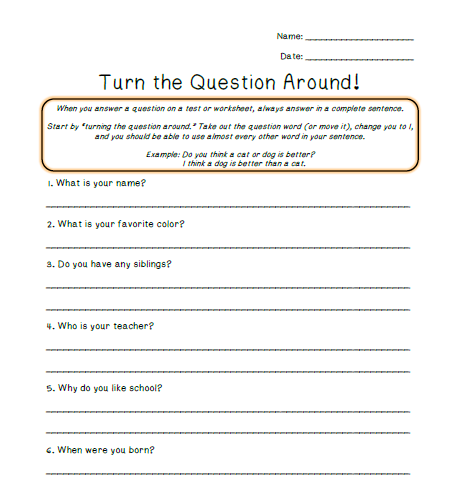
With these Text Detectives sheets, I have my kids underline JUST the answer- not the surrounding sentence- so I know they can pinpoint the exact answer. Of course, we also work on writing our answers in complete sentences… but first, they have to know exactly what the answer is.
And when they find it, they’re allowed to color the crayons (because, for some reason, they can’t stand to leave them white!)
Once we’ve practiced this a few times, my kids feel a lot more comfortable trying it themselves! Of course, our kids can’t always use these exact strategies on a test- but for those struggling kiddos especially, this gives them a process to try and a place to start. And I love that it's not just "test prep," but valuable skills for
real reading and research too!
One last thing: I love to use my
Text Detectives packs to teach finding text evidence, but hopefully these are strategies you can use or adapt with ANY text. On the off chance that you want these, though…

I've written Text Detectives passages for every month of the year, and you can choose the
2nd grade or
3rd grade reading level. The passages are similar so they can even be used together in the same classroom for differentiating! If you’re interested, you can find
Text Detectives here and try out a
Dr. Seuss reading passage for free by downloading the Preview file.
Another really helpful strategy for my kids in the next step of this process (looking back in the text both when the answer is explicitly stated, and when it’s not) is a version of QAR called the
4-H strategy.

You can read more about it here from my friend Kylie at
Ripper Reading Resources.
*How do you work with your students on answering questions in the text?*
Edited to add: This post originally contained a giveaway which has now ended. Please be sure to follow my blog for future giveaway opportunities!